Hello,everyone. First of all thanks for visiting this blog. In this blog we are going to share 'disease of Liver...'
The Liver is the largest gland in the body,weighing between 1 and 2.3 kg.

What is cirrhosis ?
Cirrhosis is a complication of many liver diseases characterized by abnormal structure and function of the liver. The diseases that lead to cirrhosis do so because they injure and kill liver cells, after which the inflammation and repair that is associated with the dying liver cells causes scar tissue to form. The liver cells that do not die multiply in an attempt to replace the cells that have died. This results in clusters of newly formed liver cells within the scar tissue. There are many causes of cirrhosis including chemicals (such as alcohol, fat, and certain medications), viruses, toxic metals (such as iron and copper that accumulate in the liver as a result of genetic diseases), and autoimmune liver disease in which the body's immune system attacks the liver.

- Swelling of the abdomen and in the hip, leg, ankle,and foot.
- Bleeding from varices
- Hepatorenal Syndrome
- Liver cancer
- Malnutrition-Cirrhosis may make it more difficult for your body to process nutrients, leading to weakness and weight loss.
Symptoms
Cirrhosis often has no signs or symptoms until liver damage is extensive. When signs and symptoms do occur, they may include:
- Fatigue
- Bleeding easily
- Bruising easily
- Itchy skin
- Yellow discoloration in the skin and eyes (jaundice)
- Fluid accumulation in your abdomen (ascites)
- Loss of appetite
- Nausea
- Swelling in your legs
- Weight loss
- Confusion, drowsiness and slurred speech (hepatic encephalopathy)
- Spiderlike blood vessels on your skin
- Redness in the palms of the hands
- Testicular atrophy in men
- Breast enlargement in men
Causes
-
The liver
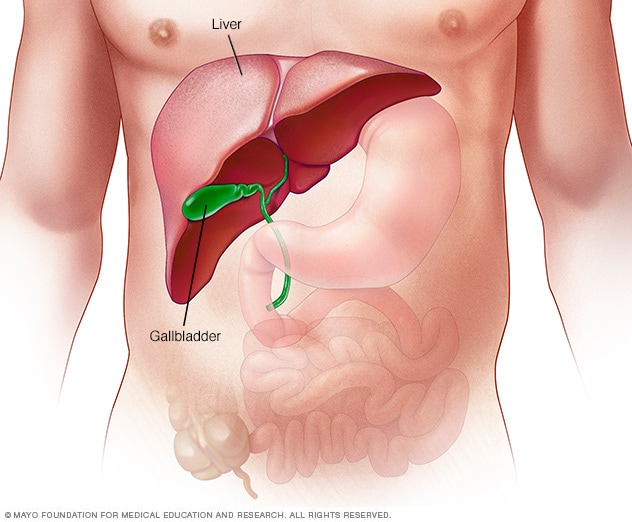
A wide range of diseases and conditions can damage the liver and lead to cirrhosis. The most common causes are:
- Chronic alcohol abuse
- Chronic viral hepatitis (hepatitis B and C)
- Fat accumulating in the liver (nonalcoholic fatty liver disease)
Other possible causes include:
- Cystic fibrosis
- Copper accumulated in the liver (Wilson's disease)
- Poorly formed bile ducts (biliary atresia)
- Inherited disorders of sugar metabolism (galactosemia or glycogen storage disease)
- Genetic digestive disorder (Alagille syndrome)
- Liver disease caused by your body's immune system (autoimmune hepatitis)
- Destruction of the bile ducts (primary biliary cirrhosis)
- Infection such schistosomiasis
- Medications such as methotrexate
Donot drink alcohol if you have cirrhosis--If you have liver disease but do not have cirrhosis, talk to your doctor about whether you may drink alcohol at all. For healthy adults, that means up to one drink a day for women of all ages and men over age 65, and up to two drinks a day for men age 65 and younger.
Reduce your risk of hepatitis-- Sharing needles and having unprotected sex can increase your risk of hepatitis B and C. Ask your doctor about hepatitis vaccinations
Eat a healthy diet-- Choose a plant-based diet that's full of fruits and vegetables. Select whole grains and lean sources of protein. Reduce the amount of fatty and fried foods you eat. Caffeinated coffee may protect against fibrosis and liver cancer.
Thank you..
Comments
Post a Comment